

* Affiliate link: If you make a purchase through this link, we’ll receive a small commission. The price won’t change for you.
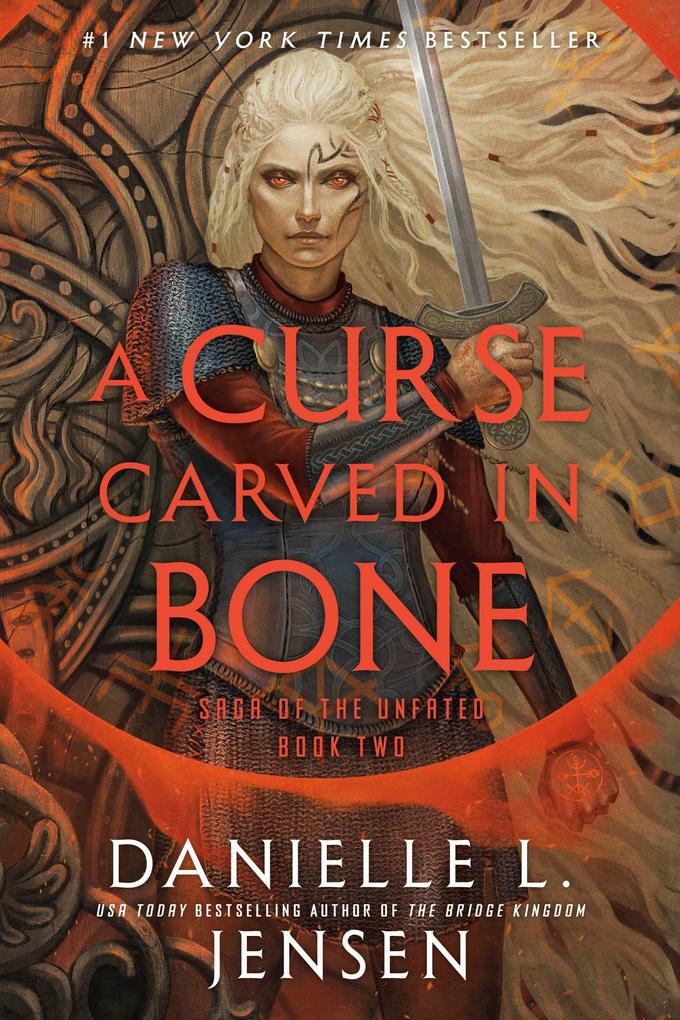
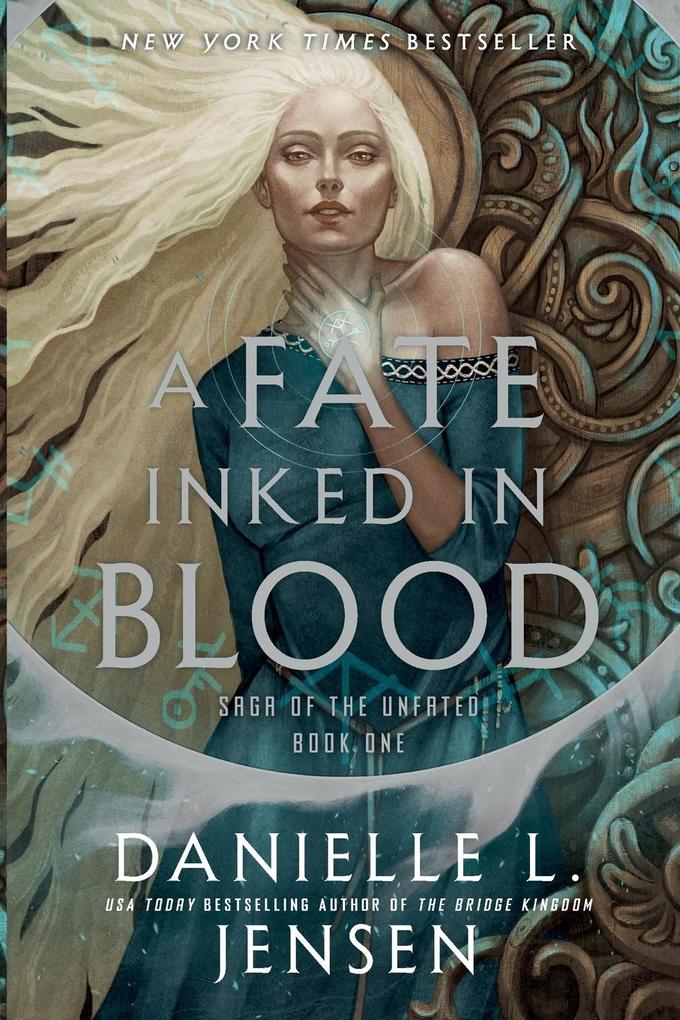
Freya dreams of adventure, unaware that the Gods are listening.
Trapped in an abusive marriage, she believes her fate is already written – until Jarl Snorri arrives, claiming an old prophecy names her as the shield maiden destined to unite her people against King Harald.
Forced into a fight, Freya’s darkest secret is revealed: she is a child of the Goddess Hlin. With her husband dead – by her own hands – Freya is forced into yet another marriage. Bound by blood, death and divine will, her future now rests in Snorri’s hands – and the mercy of the Gods.
Facing the trials of the gods and a new fight around every corner, the only light in the dark seems to be Bjorn, Snorri’s son. But Freya has to be careful. Who can she really trust? How far can she defy fate – and who will pay the price if she does?

Professional book hoarder & part-time responsible adult
Okay, my fellow Bookdragons, let’s get into it.
We start the story by meeting Freya and her husband Vragi. There’s really no need to read between the lines here – from the very first page it’s made painfully clear that Freya despises him. Vragi is a child of the god Njord and, frankly, seems to be a total asshole.
I’m going right in with my first thoughts here: I’m a huge fan of mythology in general, so I was genuinely excited to pick this book up. My strengths definitely lie more in Greek and Egyptian mythology, but I do know some things about Norse myths – and this also wasn’t my first book exploring that world (shoutout to the master Rick Riordan).
Still, I was immediately thrown off when Njord was introduced, simply because I had no idea who he was.
And honestly, that only left two options: either I’m way worse at Norse mythology than I thought (very possible), or minor gods play a much bigger role in this book than I expected. Maybe you know better than I do – but we’ll be circling back to this later.
So, as established: Vragi is a dick.
He proves this by summoning a whole shit ton of fish onto the beach so Freya can “practice” how to gut them the proper way. Freya, however, has a heart and tries to save the fish from an unnecessary death by hauling them back into the water. While she’s busy doing that, she doesn’t notice that there’s another person in the water — and accidentally throws one of the fish straight in his face.
Naturally, she’s mortified.
Luckily, the very handsome stranger takes it well and immediately starts flirting with her. He even “jokingly” asks where he can find her husband — so he might kill him and share a bed with her instead. No, I’m not exaggerating.
And yes, I understand what this scene is trying to do. It’s half a joke and half a very obvious attempt to make us like this guy, because by page seven we already know that Vragi sucks. But still — maybe give us a bit more time to actually get to know the characters before jumping straight into murder jokes and flirting?
Unfortunately, this rushed pacing doesn’t stop there.
Only two pages later, we learn that Freya has a huge secret about her identity — something absolutely no one must ever find out. Four pages after that, Jarl Snorri enters the story. Vragi has apparently told him about Freya’s wish to become a warrior, and Snorri decides to test her by ordering her into a duel to the death against his son, Bjorn. And — let’s all act surprised — Bjorn turns out to be the handsome stranger from the beach. He’s also the child of a god. The god Tyr. Yet another god I didn’t know.
They fight. Freya’s big, forbidden secret is revealed. And yes — you guessed it — she’s also the child of a god. The goddess Hlin.
I’ll circle back here. Please be honest with me: did any of you actually know these gods beforehand? Because I certainly didn’t. And for full transparency — I still don’t. Even after finishing the series.
I honestly couldn’t tell you who Hlin is, what her domain is, or what she really represents. Same goes for Tyr. And that’s a problem.
I like the idea of focusing on lesser-known gods and giving them the spotlight. That’s genuinely interesting. But if you choose to do that, you also need to properly introduce them and give readers enough context to understand why they matter. Otherwise, it starts to feel less like a deliberate creative choice — and more like the author wanted to be different without fully committing to the work that comes with it.
And that’s a shame. Because there was a lot of potential here — potential that, for me, ultimately went nowhere.
But let’s get back to the story. Snorri reveals that he already knew about Freya’s powers — because Vragi told him. Apparently, he once saw her practicing in the woods (so much for keeping her big secret and being discreet). Vragi reveals her abilities to Snorri because he knows the Jarl is searching for a child of Hlin. At the same time, he hopes this will finally give him grounds to divorce her, since she hasn’t given him any children yet.
Vragi, continuing his impressive streak of being absolutely unbearable, suggests riding off to claim Ingrid (Freya’s BFF and her brother’s flame) as his new wife instead. Enraged Freya steals Bjorn’s magical burning axe and kills Vragi.
Mind you: we’re only on page 30 here, which further proves my point of everything being rushed.
Freya loses consciousness after staring at her severely burned hand and wakes up in Snorri’s home. A healer appears — clearly someone we’re supposed to like and view as a future ally, which could have worked if the pacing gave her more than five minutes of page time. The healer tends to Freya’s arm and then Freya has to marry Snorri.
For unknown reasons, after the ceremony, it is apparently crucial to strip Freya in front of the entire town to give her a blood tattoo. Because who needs privacy. Anyhow, during this ritual, Freya almost dies — something no one seems to notice except Bjorn and Ylva (Snorri’s other wife and a witch).
We also learn that Freya is claimed by two gods. However, because Bjorn stopped the ritual early in order to save her life, no one knows who god or goddess number two is supposed to be. Mystery box unlocked.
Next comes the wedding feast, followed by the expectation that Freya must consummate the marriage with Snorri — otherwise it “doesn’t count,” which, for once, is actually historically accurate. Ylva can’t bear to watch, and Freya, seeing an opportunity, offers a blood oath instead so she won’t have to sleep with him. Ylva performs the ritual and magically binds Freya to Snorri and his blood, while also forbidding her from ever speaking about it.
During the feast, the town is attacked by a rival Jarl. Freya and Bjorn manage to lure the enemy away before too much damage is done.
And at this point — we’re not even halfway through the book. The pacing is so rushed that it’s genuinely hard to decide what deserves focus and what doesn’t. But I’m trying. I really am.
After the attack, it’s decided that Bjorn is now destined to protect Freya because, somehow, their fates are linked. He’s ordered to teach her how to fight. We then get exactly one fighting lesson — and I’m generous calling it that — before the story barrels straight into the next major plot point.
Apparently, there is a very important sacrificial festival they must attend. On the way to the sacrificial mountain, Freya sees a mysterious burning figure (that very much gave Suriel vibes) which tells her that she must offer a sacrifice, or she will die. Snorri, of course, interprets this as another trial set by the gods.
While making camp, they are attacked by yet another clan. And this brings me to two more rants.
First: I know Viking stories usually involve a lot of fighting. That’s not the issue. I’m not mad about the amount of combat — I’m mad about how boring it is. If you’re going to throw in a fight every ten pages, at least make it interesting or memorable. There is so much potential here: clever strategies, brutal chaos, genuinely gruesome moments. Think Vikings or The Last Kingdom. Instead, most of these fights feel rushed, weightless, and oddly forgettable. As with many parts of this book, the potential is there — but never fully realized.
Which leads me directly to rant number two.
Trigger warning for graphic imagery, feel free to skip ahead. In an attempt to make the violence more visual and dramatic, the book describes a warrior’s head exploding “like a melon falling to the ground.”
And you might ask: what’s the problem?
Well. THEY DIDN’T HAVE FUCKING MELONS!
Okay, sorry – sorry that really got the better of me. But please be reasonable, if we’re aiming for even a basic level of historical accuracy, there is simply no way Freya would know what a melon is. And yes, this bothered me enough to check – obviously. Literally any other comparison would have worked better.
Okay, Lisa – breathe. We’re gonna make it through this review. Deep breath in and deep breath out. And let’s go on.
So, after the attack it is decided that Freya and Bjorn must take a different route up the mountain, to escape further attacks. Obviously, this new route is the most dangerous one. And yes – this leads to another fight. This time against the undead, also known as Draug. They win – surprise.
Now they are at the mountain, and Freya can make her sacrifice. Oh – sorry I forgot – on the way into the holy mountain camp there was another fight. Thought you might wanna know. But once in the mountain camp we get a fighting break. Instead, we finally meet the big bad foe of the book: Harald. He is the one Snorri wants to overthrow. He’s also kidnapped Bjorn when he was a child and killed his mother. So, there are lots of reasons for revenge.
In the evening, they have their huge sacrifice party where Freya has to kill a bull as sacrifice for the gods. Now, with all the complaining at this point I can also give a compliment. I’m not sure if this was intended or it’s linked to my personal morals, but the writing in this scene really made me feel uncomfortable. I honestly didn’t like how all of the scared animals were killed as sacrifices. Though (and you can cheer now) this is historically correct. After the sacrifice, the gods make what I can only call a cameo appearance. Now everyone knows the gods are watching over Freya.
Freya doesn’t attend the party afterward. Instead, she spies and thinks that Ylva is working with Harald in order to kill Bjorn. On her way back to the cabin Bjorn finds her and they have their first make out session. In public. With people watching. Though apparently, she’s disguised so it’s fine, I guess.
When they go back to the cabin, they meet Snorri who tried to make allies in his fight against Harald. Apparently so did Ylva. She’s friends with a female Jarl. This Jarl is clearly meant to be another important and likable character, but with the pacing being what it is, there are simply too many people introduced too quickly. We only ever get shallow connections, and sadly that robs these moments of the emotional impact the author was likely aiming for.
Just so you can get a feeling. At this point we are only slightly over halfway through the book. Technically there is a lot of story we still need to cover, but luckily, we won’t really miss out on much if I really shorten things up. So, buckle up.
Bjorn has a vision that their town is attacked. They leave the feast early. The town is burned down. Only a few people survived. The attacker: the jarl that also attacked the town in the beginning. Naturally they want revenge. They make their way to said Jarl. Freya figures out they have a spy amongst them, working for Harald, though she can’t say who for certain. Sexual tension between Freya and Bjorn is ever present and they continue their streak of public make out sessions. Freya almost freezes to death. Bjorn’s fire magic prevents it (though fire isn’t actually linked to Tyr – but I’ll spare you the rant). They fight the Jarl and Freya goes full on gods- possessed, so now people are scared of her. Freya’s brother makes an appearance – he sucks.
At this point, emotional beats and major plot twists happen so quickly that none of them are given room to breathe.
In order to figure out more about Hlin – since apparently even all of the Vikings in the book don’t know shit about her – Freya and Bjorn ride to the only person with knowledge of her. Her mother. And yes, she also sucks. Freya proclaims she hates her and rides off with Bjorn. They discover that Harald has sent his minions. And though a minute before she hated her mother, Freya is now heartbroken, when her mom is killed and swears revenge. I can honestly say that at this point I’m slightly annoyed by anyone in this book.
Back at the fort, Harald comes to take Freya. She doesn’t want to fight and thinks the only other option is suicide. Bjorn prevents that though, by jumping down the waterfall with her? I still don’t get that logic. Anyhow. The two of them think that everyone else now believes them dead and they can run off and have a happily ever after. The natural next step? A lot of spice – duh. In the morning though Harald found them. We now learn that Bjorn was the spy. No, I’m not surprised. Anyone with two braincells could’ve figured that out pretty much since Freya’s spying on the sacrificial mountain. Freya now hates Bjorn and curses him to Hel. And we now learn that Freya’s second divine mother is none other than Hel. Finally, a Goddess I actually knew! (Though to be fair – we’ve met a child of Thor in between – because why not).
Freya tries to flee, but Bjorn captures her and he, Harald and his minions, take her to Nordeland. The end. Phew, that was a ride – and not necessarily the kind I’d queue up for again. Honestly, I was more exhausted than emotionally invested. And even writing all of this down, leaves me exhausted.
I’m sorry I’ve had to rushe this so much, but the pacing is so off that I had no other choice. Because honestly, I don’t think a book of roughly 400 pages deserves or needs this much room. Yes, the book had potential but ultimately rushed things too much. This could’ve easily been a really great and epic story I’d have gladly sat down with if it had been made into at least a trilogy.
Needless to say, I really struggled with my star rating for this book. Initially, I landed on 3.5 stars. But while writing this review, I realized that there are more issues here than I first thought — mainly pacing and a lack of accuracy when it comes to worldbuilding and mythology.
On the other hand, dropping it to 2 or even 2.5 stars feels too harsh, because despite everything, the writing itself is engaging. The book is easy to read, the style keeps you turning pages, and I never felt bored enough to stop reading.
You might think, “Okay, so 3.0 then.” And honestly? I considered that. But knowing book two won’t improve — I find myself struggling with that rating as well. We need room to go down while still being fair to this installment.
So I’ll stick with my 3.5 star rating, fully aware that it’s a little generous — and that a lot of that generosity comes from potential rather than execution.
I know this book got a lot of hype. So please share your thoughts with me. Maybe you think I’m crazy and this book easily deserves 5.0 stars. Let me know, I’d be happy to hear your POVs, my fellow Bookdragons.
Would you like to become part of our community and join in our discussions?
Then sign up here for free!
There are no results matching your search
There are no results matching your search